
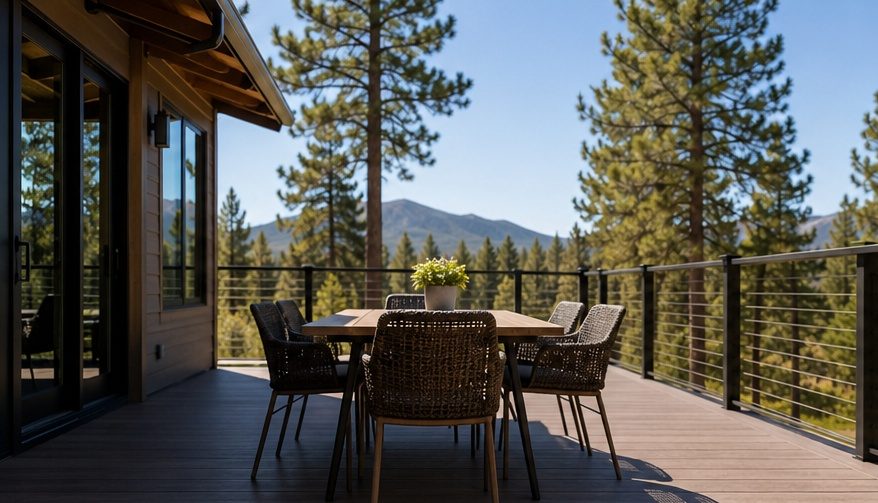
If it's been more than 10 years since you've looked at decking materials, you may be surprised by how much the industry has changed.
Many homeowners still believe wood is the economical choice, composite is expensive, and PVC is only for luxury homes. While that may have been true years ago, today's decking market looks very different. Understanding the advantages and tradeoffs of each material can help you choose the right deck for your home, lifestyle, and budget.
Wood Decking
When most homeowners think of a wood deck, they're usually thinking of cedar. For decades, cedar has been the preferred choice because it naturally resists moisture, decay, and insects better than many other wood species.
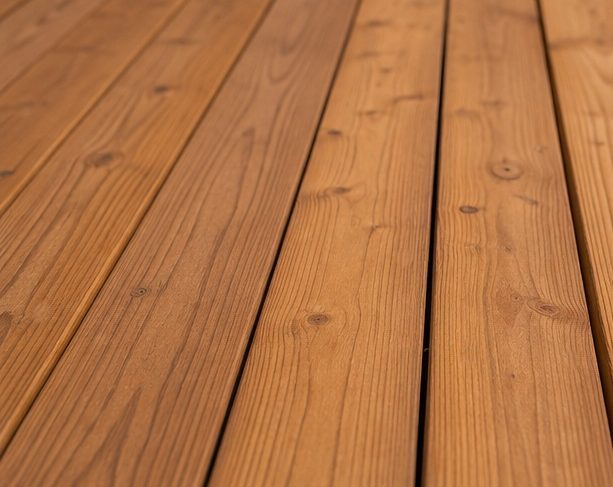
What has changed dramatically in recent years is the price. As cedar costs have continued to rise, many homeowners are surprised to learn that some entry-level capped composite decking products now cost the same as, or even less than, cedar decking.
Maintenance is another important consideration. To keep a cedar deck looking its best, it should be cleaned and re-stained or sealed approximately every three to five years. As the deck ages, refinishing often requires sanding before a new finish can be applied. While cedar can provide decades of service when properly maintained, homeowners should consider both the time and long-term cost of that maintenance.
Composite Decking
Composite decking has become one of the most popular choices for homeowners because it offers the appearance of wood without the ongoing cycle of sanding, staining, and sealing.
Composite decking is manufactured using a blend of recycled wood fibers (wood flour) and polymers, creating a durable, low-maintenance product that resists rot, insects, and splintering.
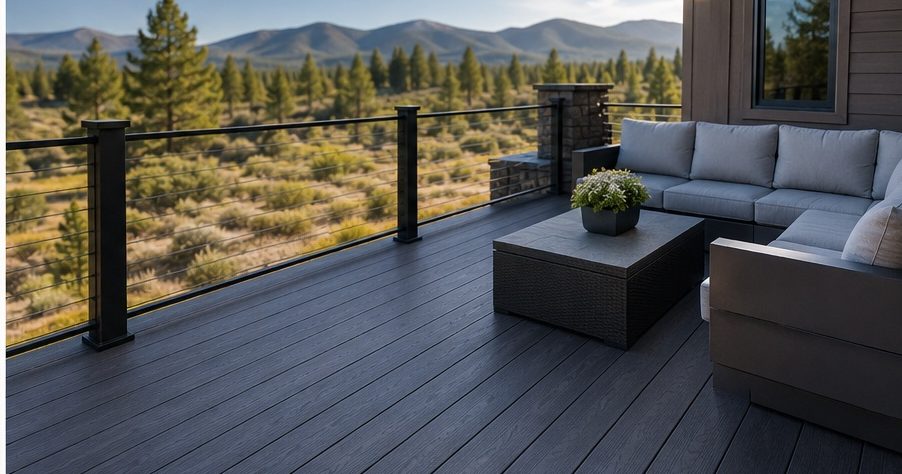
If you've ever seen an older composite deck with a faded or 'fuzzy' appearance, you've likely seen one of the first generations of composite decking. Early products were manufactured without a protective cap, leaving the wood fibers exposed to the elements. Today, virtually all premium composite decking, including every decking line offered by TimberTech and Trex, is manufactured with a durable polymer cap that surrounds the board, greatly improving resistance to moisture, fading, staining, and everyday wear.
For most homeowners, routine maintenance consists of little more than occasional cleaning with soap and water.
PVC Decking
PVC decking has become increasingly popular over the past several years as manufacturers continue improving both appearance and performance.
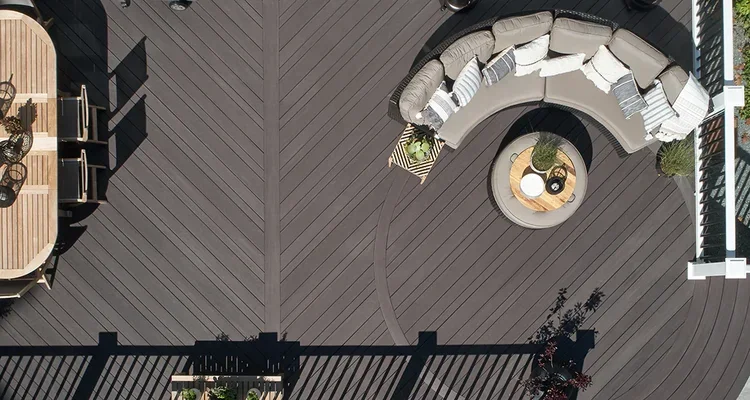
Unlike composite decking, PVC contains no wood fibers. Instead, it is manufactured entirely from engineered polymers, making it highly resistant to moisture, mold, mildew, and staining. Minor surface scratches can often be repaired with heat, provided they haven't penetrated the protective cap, and the material can be heated and bent to create curved deck borders and other custom design features.
Because it contains no wood fibers, PVC experiences less problematic thermal movement than composite decking. It still expands and contracts like any synthetic building material, but it generally generates less stress as temperatures change. PVC also tends to remain significantly cooler than comparable composite decking in direct sunlight, making it more comfortable during Central Oregon's hot summer months.
Many premium PVC decking products carry both an Ignition Resistant designation and a Class A Flame Spread Rating. In simple terms, this means they are designed to better resist ignition from wind-blown embers and, if exposed to fire, help slow the spread of flames across the deck surface compared to many traditional decking materials.
Oregon Residential Specialty Code (ORSC) Section R327, Wildfire Hazard Mitigation, already applies to many newly constructed homes in designated areas of Central Oregon. While these requirements generally do not apply to deck replacement projects, they provide a glimpse into where residential construction is heading.
Like composite decking, PVC is available in a wide range of product lines and price points. While premium collections are among the highest-priced decking products on the market, several PVC options are priced competitively with premium composite decking.
Choosing the Right Material
There isn't a single 'best' decking material for every home. Some homeowners value the natural beauty of cedar, others want the low maintenance of composite, while some prioritize the cooler surface temperatures and enhanced fire resistance offered by PVC. The best choice depends on your budget, maintenance expectations, lifestyle, and long-term goals.
Why Installation Matters
Choosing the right decking material is only part of the equation.
Modern composite and PVC decking products are engineered materials that behave very differently than traditional wood. Each manufacturer publishes installation requirements covering everything from fastening systems and framing to board spacing and expansion gaps. Following those requirements is essential for long-term performance and maintaining manufacturer warranties.
Whether you're considering a wood, composite, or PVC deck, one of the most important questions you can ask any contractor is:
Have you received manufacturer training on the product you're installing?
A contractor who understands the unique characteristics of modern decking materials is far more likely to build a deck that performs the way the manufacturer intended.
About Purple Rain Construction
Purple Rain Construction is a local, family-owned general contractor serving Central Oregon. We specialize in custom decks and residential remodeling.
Our team has completed extensive manufacturer training through both TimberTech and Trex because we believe education is just as important as craftsmanship. These products continue to evolve, and staying current with manufacturer recommendations allows us to build decks that are designed to perform for decades.
We enjoy taking the time to discuss these differences with homeowners because we believe an educated customer makes the best decisions. Building long-term relationships within our community has always been more important to us than making a sale.
Whether you choose Purple Rain Construction or another contractor, our hope is that this article helps you ask better questions, better understand today's decking materials, and feel more confident when planning your next deck project.
This article is the first in a series designed to help Central Oregon homeowners better understand today's construction materials and building practices. In our next article, we explore why the framing beneath your deck is just as important as the decking itself.